

Table of Contents
- What Is Organic Quilting Cotton?
- Benefits of Organic vs. Conventional Cotton
- Understanding Fabric Weight and Weave
- GOTS Certification Explained
- How to Wash Organic Cotton Fabric Before Quilting
- Organic Cotton vs. Recycled Polyester Thread for Quilting
- Benefits of Organic Cotton for Baby Quilts
- Frequently Asked Questions
- Conclusion
Last Updated: September 30, 2026
What Is Organic Quilting Cotton?
Organic quilting cotton is fabric made from cotton grown without synthetic pesticides, herbicides, or fertilizers. Unlike conventional cotton, which accounts for roughly 16% of global pesticide use despite occupying only 2.5% of cultivated land, organic varieties eliminate chemical inputs from seed to harvest.
The best organic cotton fabric for quilting typically weighs between 4.0 and 5.5 ounces per square yard, making it substantial enough to hold intricate piecing without fraying excessively, yet flexible enough for free-motion quilting. Cotton dominated the quilting fabric market share at approximately 48.2% according to HC Quilts market analysis, reflecting its enduring popularity among makers seeking reliable, versatile material for their projects.
Benefits of Organic vs. Conventional Cotton
Conventional cotton production relies on pesticide applications that accumulate in soil and waterways. Organic farming rebuilds soil health through crop rotation and natural pest management, producing fiber with superior long-term durability.
From a quilter's perspective, the practical differences matter. Organic cotton typically exhibits better breathability and tensile strength because it hasn't been treated with synthetic chemical finishes that can degrade over time. Consumer demand for organic cotton quilts saw an increase of approximately 29% during 2025, driven by rising sustainability awareness among middle-income households, according to Business Research Insights quilt market analysis. This shift reflects a broader recognition that quilts made from organic cotton retain their integrity through decades of washing and use.
Conventional cotton often requires heavier chemical treatments to achieve consistent colorfastness and hand feel. These treatments can accumulate in the finished quilt, potentially causing irritation for sensitive skin or babies.
Understanding Fabric Weight and Weave
Quilting-weight cotton typically ranges from 4.0 to 5.5 ounces per square yard, providing enough body to support intricate piecing without excessive bulk at seams. Lighter fabrics (under 4 oz) tend to shift during cutting and piecing, while heavier weights (over 6 oz) become difficult to needle.
Tightly woven organic cotton offers superior fiber uniformity, meaning individual threads hold their position within the grid rather than slipping during piecing or quilting. This uniformity prevents needle and thread compatibility issues that plague loosely woven fabrics, where the needle can split fibers instead of passing cleanly between them.
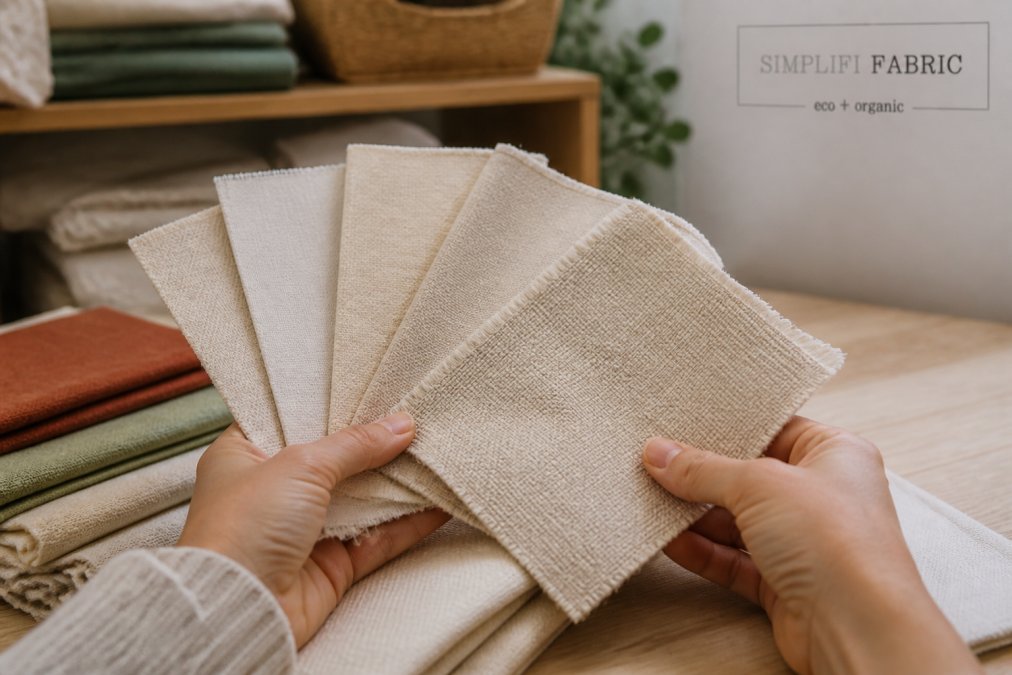
The selvage, the finished edge of the fabric, serves as a visual indicator of quality. Trim selvage edges before cutting pattern pieces, as they shrink differently than the body of the fabric and can distort piecing accuracy.
GOTS Certification Explained
GOTS (Global Organic Textile Standard) certification represents the most rigorous third-party verification available for organic cotton fabric. GOTS-certified textiles must meet strict criteria at every stage: organic fiber production, processing without prohibited chemicals, labor standards, and environmental responsibility.
Growing consumer demand for GOTS versus OEKO-TEX certification transparency in quilting materials reflects quilters' desire to understand exactly what they're purchasing, according to The Crafty Quilter certification guide. While both certifications matter, GOTS specifically addresses organic fiber integrity from farm to finished fabric, whereas OEKO-TEX focuses on chemical testing of finished textiles. For quilters prioritizing organic production practices, GOTS certification provides the assurance that no synthetic inputs contaminated the fiber at any stage.
Certification does not guarantee quality. Two GOTS-certified cottons can vary significantly in hand feel, colorfastness, and shrinkage rates depending on the manufacturer's processing choices. Examine fabric specifications, thread count, weight, and weave structure independently of certification status. Understanding the broader standards behind GOTS certified cotton helps quilters distinguish between marketing labels and the actual material properties that determine the longevity of a finished project.
How to Wash Organic Cotton Fabric Before Quilting
Pre-washing organic cotton before cutting and piecing is essential to prevent shrinkage-related distortion in the finished quilt. Unlike conventional cotton, which is often pre-shrunk during manufacturing with chemical sizing, organic cotton retains its natural fiber structure and shrinks more unpredictably.
Measuring Shrinkage Before You Cut
Organic cotton typically shrinks 3-5% in length and width on the first wash. Cut a test swatch at least 25 cm × 25 cm from the bolt, measure it carefully, wash using the same water temperature and drying method you plan to use for the finished quilt, then measure again when completely dry. Calculate the percentage shrinkage: (original measurement − final measurement) ÷ original measurement × 100.
Use this measurement to adjust yardage calculations. If your pattern calls for 2 yards of fabric and your test swatch showed 4% shrinkage, purchase 2.08 yards to account for the loss.
Washing Protocol for Maximum Stability
Soak the fabric in cool water (around 15°C) for 10-15 minutes before agitating gently. Use a mild detergent free of optical brighteners, fabric softeners, or enzymes, which can interfere with dye absorption and affect the quilt's hand feel.
Agitate gently by hand for 2-3 minutes, then drain and rinse in cool water until the rinse water runs completely clear. For fabrics with natural dyes or delicate colors, consider a second gentle soak in cool water with a small amount of white vinegar to set the dye.
Drying Methods and Their Impact on Final Hand Feel
Lay flat or hang to dry in indirect light; direct sunlight can fade organic cotton. Air-drying produces superior results: the fibers relax evenly without the stress of heat and tumbling. If you must use a dryer, select the lowest heat setting and remove the fabric while still slightly damp.
Birds Overhead - Little Bo - Kimberly →
Once completely dry, press gently with a warm iron (around 120°C) to remove wrinkles and restore the crisp hand feel that makes piecing easier.
The Pre-Wash vs. No-Wash Trade-Off
Some quilters skip pre-washing to preserve the original sizing, which provides body during piecing. However, this creates risk: if you've pieced the quilt without accounting for shrinkage, the finished quilt will pucker noticeably after washing.
For predictable results and maximum longevity, pre-washing remains the standard practice among experienced quilters, particularly for heirloom quilts and baby quilts.
Organic Cotton vs. Recycled Polyester Thread for Quilting
Thread choice determines both the quilting process and the quilt's durability. The decision between organic cotton thread and recycled polyester thread directly affects needle selection, tension consistency, and how the finished quilt behaves through repeated washing.
Shrinkage Compatibility and Seam Puckering
Organic cotton thread pairs naturally with organic cotton fabric because both shrink at similar rates. When both are organic, pre-washing accounts for shrinkage in both simultaneously, preventing the puckering that occurs when synthetic thread is used with organic fabric.
Recycled polyester thread presents a fundamental mismatch: polyester doesn't shrink, meaning it maintains tension differently than organic cotton thread on organic fabric. A quilt that looks flat before washing may develop wavy seams and distorted piecing after the first wash if the thread and fabric shrinkage rates don't align.
Needle Size and Fiber Structure Interaction
Tightly woven organic cotton has a more delicate fiber structure than conventional cotton treated with chemical sizing. When using organic cotton thread with organic cotton fabric, the fibers grip each other during stitching, creating consistent tension and reducing thread breakage. A size 80/12 needle works well for most organic quilting-weight cotton with organic cotton thread.
Polyester thread, being slicker and more uniform in diameter, can slide through loosely woven sections of fabric without the same grip, creating tension inconsistencies.
Dye Absorption and Color Matching
Sustainability Trade-Offs
Benefits of Organic Cotton for Baby Quilts
Baby quilts demand fabric that won't irritate sensitive skin or off-gas harmful chemicals during sleep. Organic cotton eliminates synthetic pesticide residues and chemical finishes, making it the safest choice for quilts that will contact a baby's face and skin for hours daily.
| Fabric Type |
|---|
| Organic cotton quilting weight |
| Conventional cotton quilting weight |
| Organic cotton sateen |
| Shrinkage Rate |
|---|
| 3-5% |
| 1-2% |
| 4-6% |
| Best For |
|---|
| Baby quilts, heirloom projects |
| General quilting, less sensitive use |
| Binding, backing, drape-heavy projects |
| Thread Compatibility |
|---|
| Organic cotton thread |
| Polyester thread |
| Organic cotton thread |
| Cost per Half-Yard |
|---|
| $7.96-$10.75 |
| $4-$6 |
| $10-$14 |
Frequently Asked Questions
What is the best weight of cotton fabric for quilting?
Quilting-weight cotton, typically 4.5 ounces per yard, is the industry standard. This weight provides the ideal balance between durability and ease of piecing. Lighter fabrics (under 4 ounces) may fray excessively, while heavier fabrics become difficult to needle. Most organic cotton quilting fabrics meet this 4.5-ounce specification, making them suitable for intricate piecing and free-motion quilting projects.
How do I identify GOTS-certified organic cotton?
GOTS (Global Organic Textile Standard) certification confirms that organic cotton was grown without synthetic pesticides and processed without harmful chemicals. Look for the GOTS label on fabric listings or product descriptions. Certified fabrics will display certification details from independent auditors. This certification ensures the entire supply chain, from farming to manufacturing, meets strict environmental and social standards, making it a reliable indicator of genuinely organic fabric.
Does organic cotton shrink more than regular cotton?
Organic cotton can shrink 3-5% if not pre-washed, similar to conventional cotton. Pre-washing organic cotton fabric before quilting prevents significant shrinkage in finished projects. The absence of chemical finishes in organic cotton doesn't inherently cause greater shrinkage; proper preparation through washing in warm water and gentle drying ensures dimensional stability. Many quilters pre-wash to prevent uneven shrinkage between pieced sections.
Why choose organic cotton for baby quilts?
Organic cotton for baby quilts eliminates exposure to synthetic pesticide residues and harsh chemical finishes that can irritate sensitive skin. Babies spend extended time in contact with quilts, making chemical-free materials essential. Organic cotton breathes naturally, regulates temperature, and maintains softness through repeated washing. These qualities make organic cotton the preferred choice for heirloom quilts and items intended for infants and young children.
Conclusion
Choosing organic quilting cotton offers a tangible way to reduce environmental impact without compromising on the quality and feel quilters expect. From its cultivation free of synthetic chemicals to its superior breathability and durability, organic cotton provides a healthier, more sustainable foundation for all your quilting projects. When you select organic cotton, you're not just choosing fabric; you're investing in the longevity of your creations and the well-being of the planet. Simplifi Fabric is committed to providing high-quality organic cotton fabrics that meet the needs of discerning quilters, ensuring your projects are beautiful, durable, and responsibly made. Explore the range of organic quilting cottons at https://www.simplififabric.com to begin your next conscious creation.